CASE STUDY
Geotube Dewatering for Septage and Waste Sludge in Eganville, Ontario
The challenge:
Enabling a municipal WWTP to receive septage from local haulers, without adding complex and costly upgrades
In 2002, the Ontario government announced its intention to eliminate the land application of untreated septage, spurring private haulers and municipalities across the province to begin searching for alternative methods. Most municipal wastewater treatment plants were not designed to treat septage and would not be able to handle the high concentrations of ammonia, organics and solids that are typically found in the waste.
Concerns mounted that septage haulers would have to travel great distances to access disposal sites, or that local treatment plants would require costly and complex upgrades to be able to meet the sudden demand for septage processing.
The solution:
Simple Geotube process dramatically reduces TSS and BOD in raw septage
The small town of Eganville, ON, located about 130 km from Ottawa, opted for a simple, cost-effective system that uses Geotube® containers, polymer and gravity to collect, dewater and store the difficult-to-treat, insoluble components of septage.
Bishop Water presented the concept to the town in the Fall of 2004 and began a pilot project at the Eganville Wastewater Treatment Plant (WWTP) in July 2005.
A Geotube® unit measuring 22 ft. x 22.5 ft. was filled with about 21,000 gallons of polymer-conditioned septage and allowed to dewater through the winter months.
Testing of the filtrate showed that polymer treatment and Geotube filtration reduced BOD from 3,761 mg/L in the raw septage, to 413 mg/L. TSS was also significantly reduced, from 9,400 to 121 mg/L. By separating a significant portion of the non-soluble, organic loading with the Geotube process, the filtrate could be sent to the WWTP for treatment, without concern about causing a process upset from nutrient shock loading.
At the end of the pilot test, the solids content of the septage in the Geotube® unit had increased from 3% to 14%. The dewatering outcome was expected; however, testing also showed that the amount of pathogenic bacteria in the dewatered solids also decreased significantly.
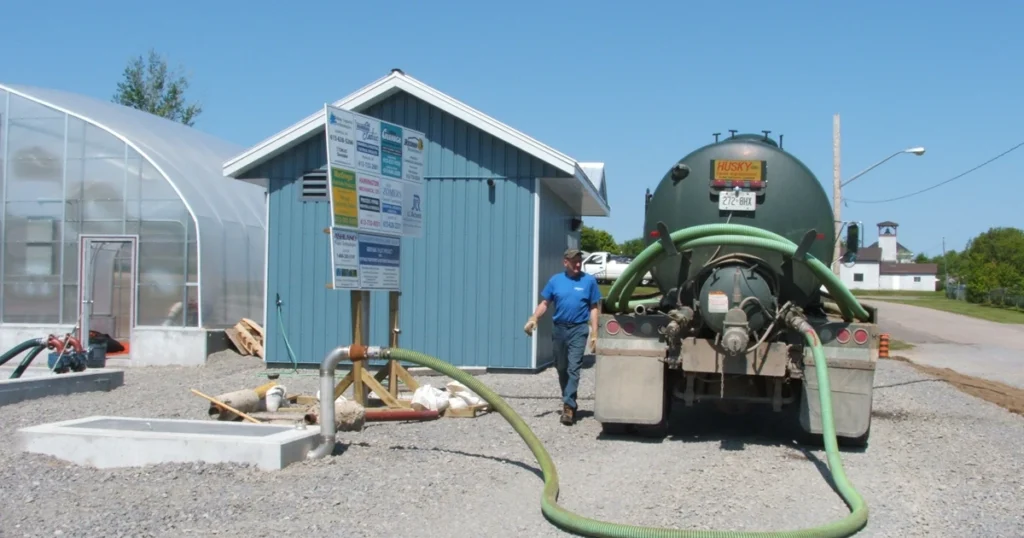
Septage haulers can discharge trucks into an underground 10,000-gal tank, which is pumped into Geotubes when full.
The effectiveness of polymer conditioning and Geotube® dewatering, combined with the simplicity and affordability of the technology, encouraged Bonnechere Valley to implement the Bishop Solids Management Solution as a long-term solution for the treatment of septage and biosolids from the wastewater treatment plant.
The results
Award-winning solution that enables WWTP to handle septage and improve sludge management
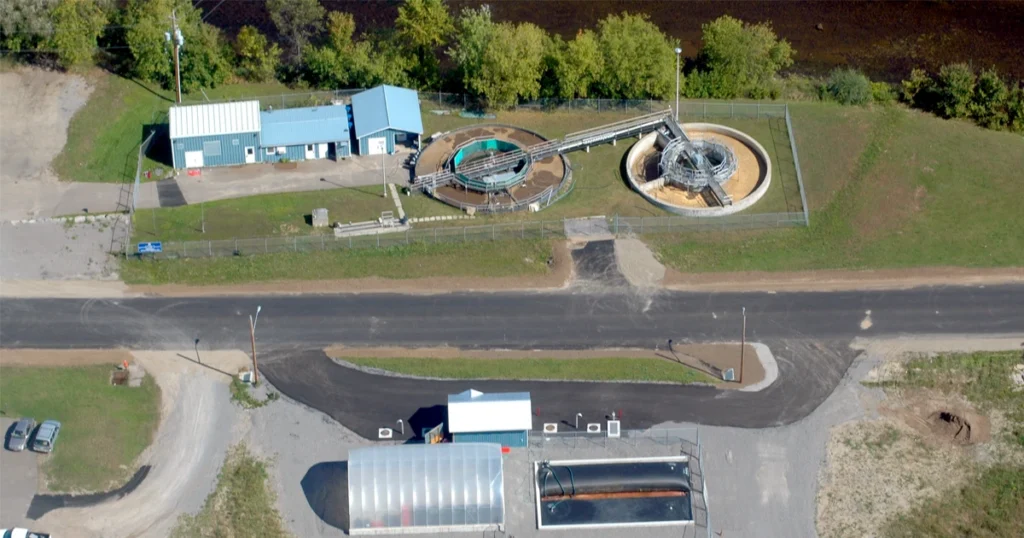
Construction on the permanent septage receiving station and dewatering facility began in September 2007 and was completed in April 2008. The facility is located across the road from the Eganville WWTP and is also used to collect and dewater waste activated sludge from the plant.
Sludge and septage is collected and temporarily stored in a 10,000 gallon (37.8 m3) underground holding tank. Once full, the sludge is pumped through the polymer conditioning system and then to the Geotube containers. Polymer is injected directly into the feed line to accelerate dewatering and retain BOD, TSS and other contaminants in the Geotube.
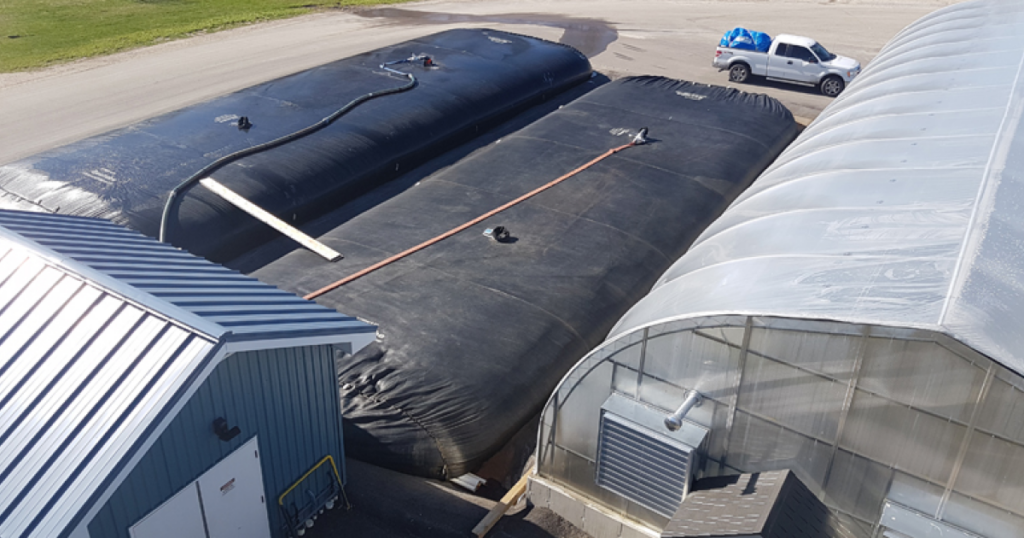
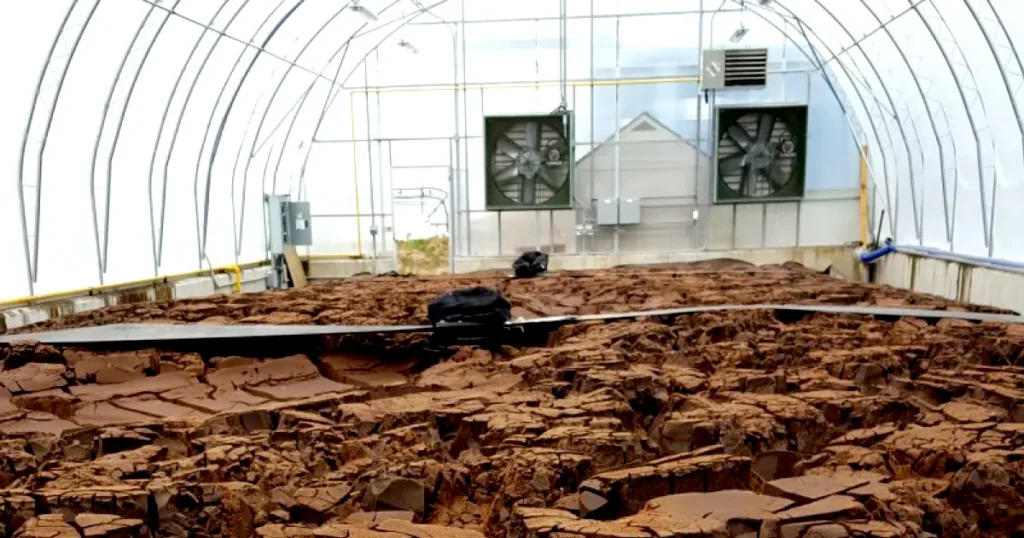
The laydown area can accommodate up to six Geotube® containers that are 30 feet in circumference by 50 feet (15.25-metre) in length. Two of the Geotubes can be set up on a dewatering pad that is inside a greenhouse, which maintains an indoor temperature above freezing and enables the facility to receive and dewater solids year round.
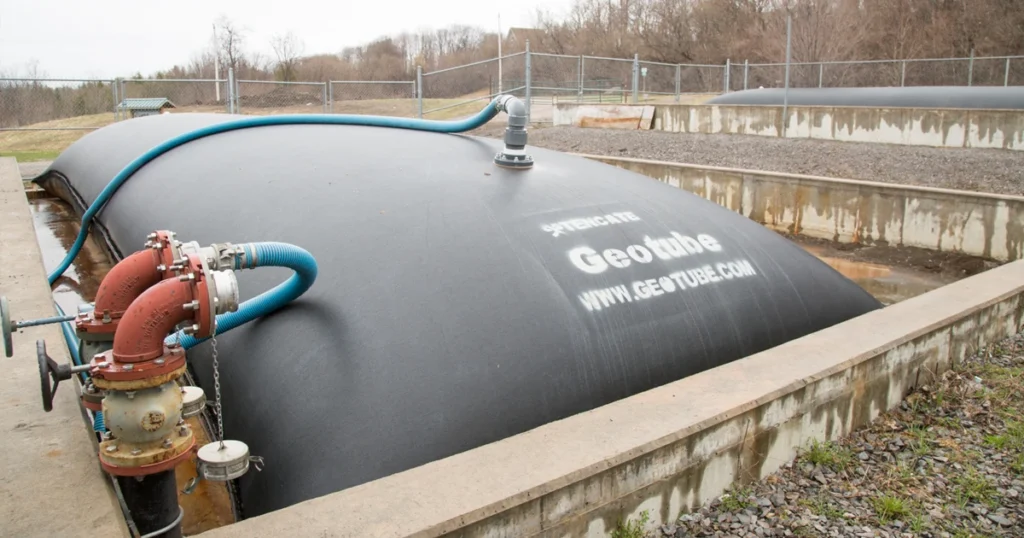
Once full, the Geotube continues to dewater passively, producing dry solids and a significant reduction in volume.
“The first year of the septage pilot project has been very successful,” said Andrew Polley, Environmental Project Manager for the Township of Bonnechere Valley. “The dewatering process has worked well. All of the pathogens and metals in the dewatered material have been well below MOE levels for land application use.”
After a period of dewatering and stabilization, the biosolids are typically sent to the municipal landfill where they are not buried, but instead used as a soil amendment to the final cover.
The Eganville WWTP continues to accept septage from local haulers on a fee-for-service model, which helps support the operation and opens new revenue opportunities by extending the service to a wider area of haulers.
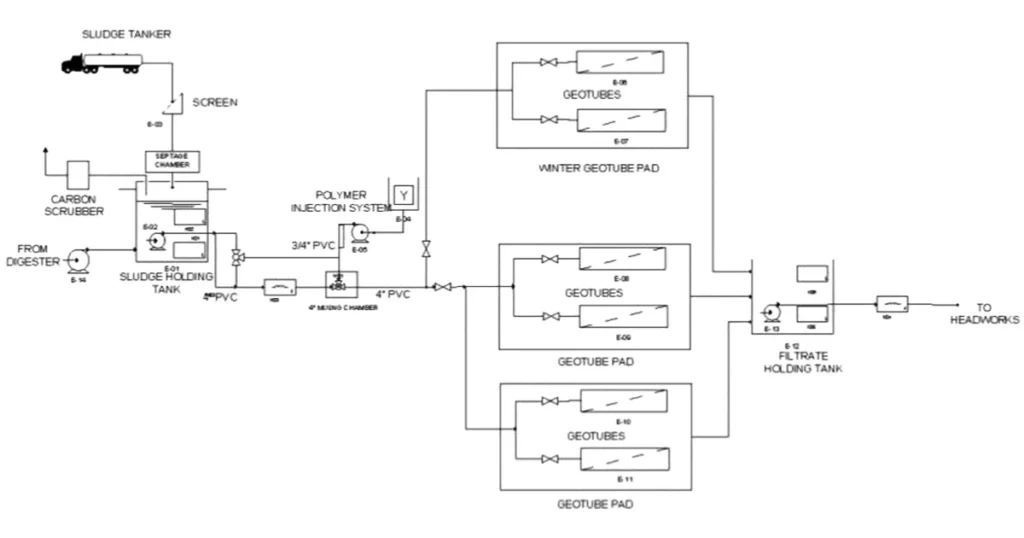
Process diagram of the Bishop Solids Management Solution at Eganville WWTP.